24 Aug 23 12:23 am type: related: ethereum blockchain eth-transactions
eth-blocks
- to ensure all network participants maintain a synchronized state and agree on history of txns
- blocks = batches of txns
- hundreds of txns are committed, agreed and synchronized all at once
- blocks are only created and committed on ethereum every 12 seconds to give time for all network participants to catch up
- a block is put together by a randomly selected validator on the network then propagate to the rest of the network
- other nodes add this block to their end of the blockchain, and a new validator is then selected to create the next block and so on
the block-assembly process and consensus process is called “proof of stake”
what’s in a block
-
slot
-
proposer_index - id of the validator proposing the block
-
parent_root - the hash of the preceding block
-
state_room - root hash of the state object
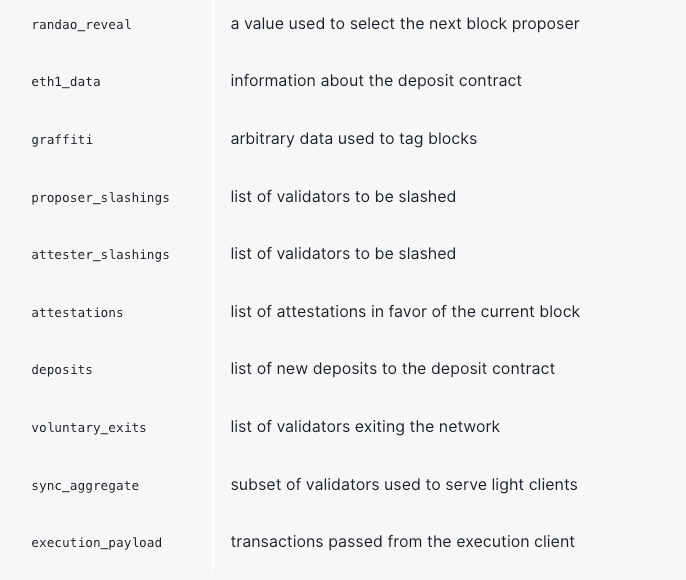
-
after proof of stake, the blocktime has been consistent with 12 seconds
-
each blog has a target size of 15 million gas, but it goes up and down upto 30mil (2x)
-
total amt of gas expended by all txns in the block must be less than the limit
-
blocks shouldnt be way too big either cuz
- less performant full nodes wouldnt be able to keep up
- greater computing power required to process them in time for next slot
- this is a centralizing force, which is resisted by capping block sizes 😎